Affiliate disclosure: PureCouponCodes earns a commission on purchases made through some retailer links in this guide. This does not affect which strategies or stores are covered.
The average American household spends $6,224 per year on groceries — about $519 per month — according to the Bureau of Labor Statistics 2024 Consumer Expenditure Survey. For a family of four on the USDA's moderate food plan, that figure climbs to $1,250–$1,430 per month in 2025–2026. And on top of the grocery bill itself, the USDA Economic Research Service estimates that 30–40% of the U.S. food supply goes uneaten — meaning the average family of four wastes roughly $1,500 per year in food they bought and never ate.
These two numbers together define the real problem: most households are not just overspending at the register — they are also throwing away a substantial portion of what they buy. Meal planning and strategic coupon use address both simultaneously, but only when they work together. Planning meals around what is on sale means you buy what you will actually use; using coupons on items you already planned to buy means you actually capture the discount instead of buying something unnecessary.
This guide covers how to integrate meal planning and grocery couponing into a single system — including which store apps offer the deepest digital coupons, how to stack rebate apps on top of in-store discounts, and how to build a meal plan that is designed around sales from the start rather than retrofitted around coupons after the fact.
1. Why Meal Planning and Couponing Fail Separately — But Work Together
Most people who try couponing without meal planning end up with a pantry full of items they do not need. You clipped a coupon for canned tomatoes — now you have six cans but no recipe that uses them. Most people who meal plan without couponing pay whatever the store charges for the ingredients they need that week, missing the 15–40% savings available on many of those exact items through digital coupons and rebate apps.
The integration problem: couponing is supply-driven (you save on what happens to be discounted), while meal planning is demand-driven (you buy what you need for specific meals). The solution is to make the weekly sales ad your starting point, then plan meals around what is discounted rather than going to the store with a fixed recipe list.
What the data shows about unplanned grocery behavior:
The Food Marketing Institute reports that 62% of grocery shoppers make at least one unplanned purchase on every trip. The average impulse buy adds $15–$25 per trip — which over a year of weekly shopping is $780–$1,300 in purchases nobody planned to make.
Shopping without a list leads shoppers to spend up to 40% more than they intended, per consumer behavior research compiled by Cook Smarts.
When families do not have a dinner plan, the average household orders takeout 2–3 times per week. At $20–$30 per delivery order (after fees and tip), that is $2,080–$4,680 per year — often spent because "nothing at home looked good," not because the pantry was empty.
Combined, these behaviors explain why the average family spending $200 per week on groceries is effectively wasting $90–$130 of it monthly on food that spoils, impulse buys, and delivery that replaces meals they already paid to make. A meal plan eliminates the conditions that produce those losses. Coupons reduce what you pay for the food that remains.
2. The Cost-Per-Meal Framework: Setting a Real Budget
Before any planning or couponing, it helps to know what a realistic target looks like. The USDA Thrifty Food Plan — the minimum-cost diet that meets nutritional guidelines, used as the basis for SNAP benefits — puts the September 2025 weekly cost for a family of four at approximately $219/week ($950/month). That assumes cooking almost everything from scratch, buying store brands, and wasting essentially nothing.
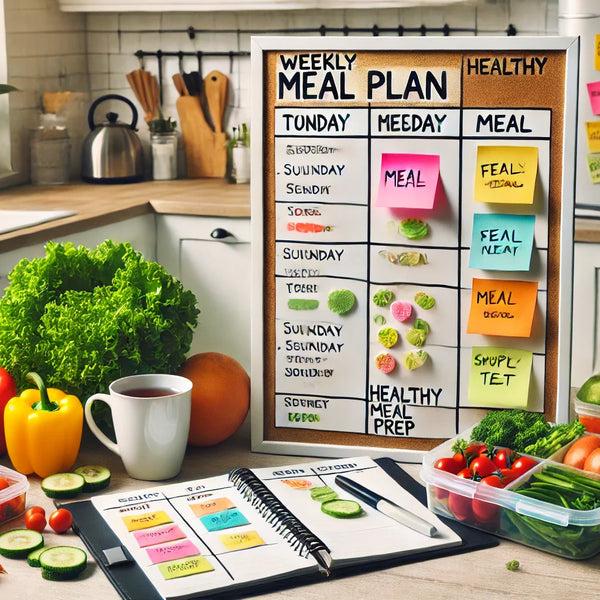
The moderate plan, which is what most financial advisors reference as a "comfortable" grocery budget, is approximately $300–$325/week ($1,250–$1,400/month) for a family of four in 2025–2026. Single adults on the moderate plan spend roughly $112/week.
How to think about cost per meal instead of weekly totals:
A more actionable frame is cost per serving. On the USDA moderate plan:
Target: $3.50–$5.00 per serving for home-cooked meals
Takeout/delivery: $12–$20+ per serving after fees and tip
Restaurant dining: $15–$30+ per person
When you plan five dinners that each serve four people and cost an average of $15 in ingredients, you are spending $3.75 per serving and freeing up roughly $85–$130 per week versus a household that orders out twice and eats out once. That gap — $4,400–$6,800 per year — is where the real money in meal planning lives, separate from any coupon savings.
The role of coupons in this framework: On a $200 weekly grocery run, strategic use of digital coupons and rebate apps typically saves $20–$50. That is meaningful ($1,040–$2,600 per year) but secondary to the behavioral savings from eliminating impulse buys and unplanned takeout. Treat coupons as the optimization layer on top of a solid plan, not as the primary savings strategy.
3. Step 1: Plan Around the Weekly Ad, Not Around Recipes
The standard meal planning advice — "pick your recipes, then buy the ingredients" — works fine for households that are not budget-constrained. For anyone actively trying to reduce their grocery bill, the order should be reversed.
The sale-first planning approach:
Check the weekly ad before opening any recipe. Every major grocery chain (Kroger, Publix, Aldi, Walmart, Target, Safeway/Albertsons) publishes its weekly circular on Sunday or Wednesday. Most store apps show this digitally. Identify the proteins, produce, and pantry items on sale before you decide what to cook.
Build meals around what is cheapest this week. If chicken thighs are $0.99/lb this week and pork tenderloin is full price, this week's meal plan should feature chicken. If sweet potatoes are $0.79/lb and white potatoes are $1.29/lb, this week's sides feature sweet potatoes.
Plan 4–5 dinners, not 7. Planning every meal for a week is unsustainable for most households. Plan four or five dinners, design two of them to generate leftovers for lunch, and leave two nights flexible. This reduces your ingredient list, which reduces both spend and waste.
Use a shared ingredient strategy. Plan meals that overlap in ingredients. If you are making tacos on Tuesday, buy a large pack of ground beef — the leftover becomes the meat sauce for Thursday's pasta. If you are roasting chicken Sunday, the leftovers become Monday's grain bowl. This maximizes what you pay for each protein and produces multiple meals from a single purchase.
Check your pantry before you write the list. The most common source of food waste is buying ingredients already in the pantry. Before writing a shopping list, identify what proteins, grains, canned goods, and sauces you already have. Plan at least one meal per week around clearing pantry items.
Where to check weekly ads:
Store-specific apps (Kroger, Safeway, Publix, etc.) — digital versions of the weekly circular
Flipp app — aggregates weekly ads from all stores in your area in one place
Store websites under "Weekly Specials" or "Deals"
4. Step 2: Stack Digital Coupons Before You Shop
Once you have a meal plan built around the weekly sale items, the next layer is digital coupons — applied before you go to the store.
The coupon sequence for grocery shopping:
Layer 1: Store loyalty card + digital coupons (highest priority)
Every major grocery chain has a free loyalty program and a corresponding app where digital coupons can be "clipped" to your account and applied automatically when you scan your card at checkout. These are typically the highest-value grocery coupons available and are exclusive to loyalty members.
Kroger / Kroger family stores (Ralphs, Fred Meyer, Fry's): Kroger's digital coupon system includes both manufacturer coupons and Kroger store coupons, both clippable in the app. Kroger allows its digital coupons to stack with weekly sale prices. In 2026, Kroger Pay offers up to 5% back on the first $3,000 in annual spending.
Walmart: The Walmart app's Scan & Go feature shows "Instant Rollbacks" in the digital cart that are not always visible on physical shelf tags. Walmart+ members earn 10¢/gallon fuel savings on top of grocery discounts.
Target Circle: Loads personalized digital offers automatically to your account. Stacks with manufacturer coupons (one of each per item). As of January 2026, Target Circle deals stack with price-matched items.
Publix: Digital eCoupons load to your Publix account and apply automatically at checkout, often stacking with Publix's BOGO sales for compound savings.
Safeway/Albertsons: The Just for U program offers personalized deals based on your purchase history plus digital coupons from manufacturers.
Layer 2: Manufacturer digital coupons (Coupons.com / P&G / brand websites)
Manufacturer coupons are issued by the brand itself (Procter & Gamble, General Mills, Kimberly-Clark) and are separate from store coupons. You can stack one manufacturer coupon and one store coupon on the same item at most grocery retailers. Sources for manufacturer coupons:
Coupons.com app — digital manufacturer coupons loadable to store loyalty accounts
Brand websites directly (P&G Everyday, General Mills Box Tops) — sometimes offer exclusive values not in third-party apps
Sunday newspaper inserts — still worth clipping for high-value items like razor blades, detergent, and diapers
Layer 3: Cashback apps (clip before shopping)
Ibotta is the dominant grocery cashback app in the U.S. as of 2025–2026. Unlike rebate apps (which scan receipts after purchase), Ibotta requires you to activate specific offers before shopping. Active Ibotta users earn an average of $30–$50 per month according to Ibotta's own published data; strategic stackers who clip offers before every trip and combine them with store sales consistently report $80–$100/month.
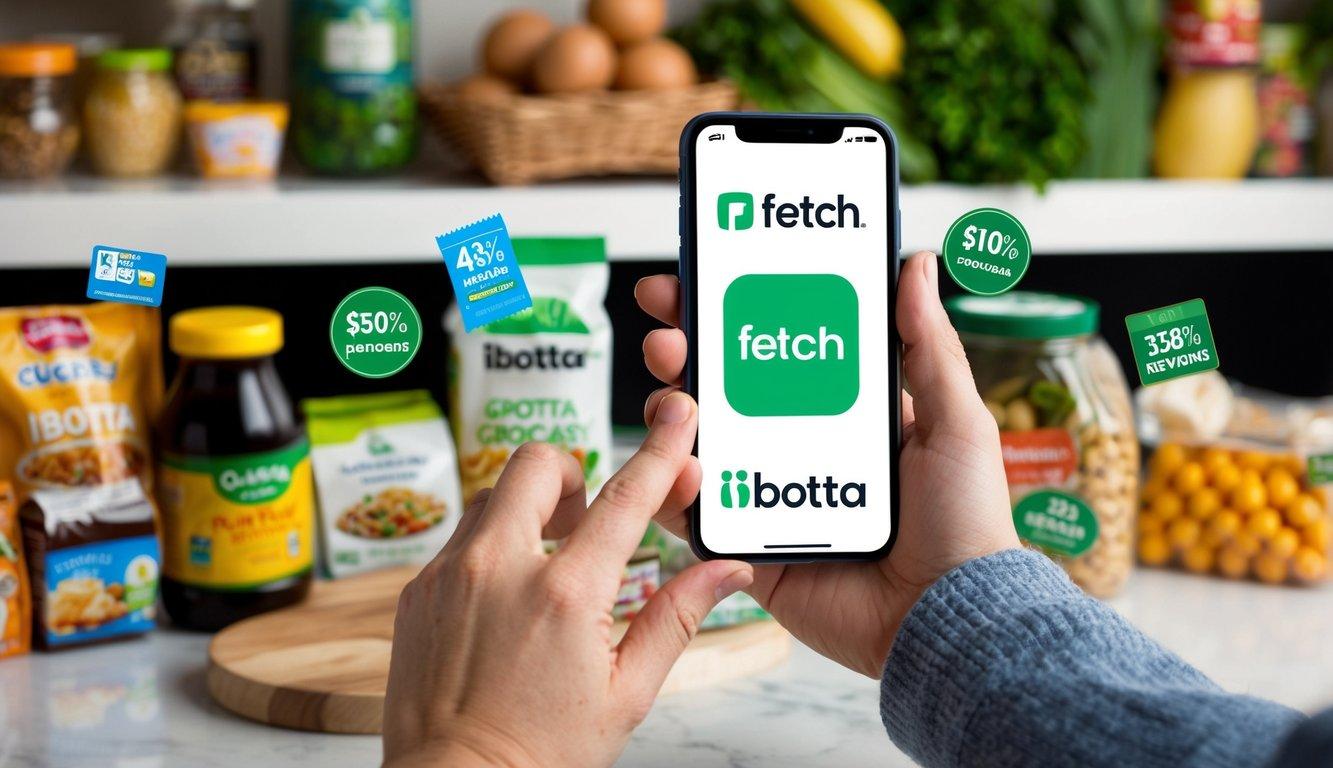
How to activate Ibotta correctly:
Open Ibotta before writing your final grocery list
Search for each item you plan to buy
Activate the offer (click "Add Offer")
Shop in-store or link your loyalty card for automatic credit
Credit posts within 24 hours
Ibotta offers frequently include "any brand" options on staples like eggs, milk, bread, and butter — meaning you earn cashback regardless of which brand you buy. These are worth activating every week without exception.
The triple stack in practice: A box of Cheerios on sale at Kroger for $3.49 (regular $5.49), combined with a $1 off manufacturer coupon (from Coupons.com) and a $0.75 Ibotta rebate, costs $1.74 and earns $0.75 back = effective price of $0.99 for a box of cereal with a regular price of $5.49. That is an 82% effective discount from three layers on an item you planned to buy anyway.
5. Step 3: Add Rebate Apps as a Post-Purchase Layer
Unlike Ibotta (which requires pre-activation), receipt-scanning apps work after checkout and stack cleanly with all in-store discounts because they are a separate, post-purchase mechanism.
The three most useful receipt apps for grocery stacking:
Fetch Rewards — scan any receipt from any store and automatically earn points on 600+ participating brands. No pre-activation required. You earn on brands whether or not you had a coupon. Converts at 1,000 points = $1, redeemable as gift cards. Average passive earner gets $10–$15/month; active users who complete bonus challenges earn $25–$40/month. Best use: scan every single grocery receipt as a default habit. It takes 30 seconds in the parking lot.
Checkout 51 — releases a new list of cash back offers every Thursday morning. Offers cover pantry staples, cleaning supplies, and occasional produce. You can stack Checkout 51 rebates with in-store BOGO sales and store coupons (with some restrictions on combining with manufacturer digital coupons — read the fine print). Requires $20 minimum before payout via check.
Ibotta (post-purchase mode) — if you forget to pre-activate Ibotta offers before shopping, some stores (Walmart, Target) allow receipt scanning after purchase. This is less reliable than pre-activating, but worth attempting if you missed the pre-shop step.
The "double dip" strategy: Submit the same receipt to Fetch Rewards, Checkout 51, and Ibotta simultaneously. If all three have offers for brands on your receipt, you earn from all three on the same purchase. This is fully permitted — each app operates independently and does not cross-check against the others.
6. Store-by-Store Digital Coupon Programs
Kroger Family Stores
Kroger's digital coupon system is one of the most comprehensive in U.S. grocery retail. The Kroger app allows you to clip both manufacturer and Kroger store coupons, which apply automatically when you scan your Plus Card at checkout. Key features:
Fuel points: Every $1 spent = 1 fuel point. Reach 100 points and save $0.10/gallon at Kroger fuel stations (up to 35 gallons). Digital coupon purchases frequently earn 2×–5× fuel points.
Catalina coupons: Printed at checkout based on purchase patterns, redeemable on your next visit.
Kroger Cash Back Rewards: Select offers that pay cash back rather than a product discount — loadable to your account like a digital coupon.
Important: Kroger gives overages on coupons — meaning if a coupon is worth more than the item's sale price, the overage applies to the rest of your transaction. This allows experienced Kroger shoppers to effectively get paid to buy some items.
Walmart
The Walmart app's grocery coupon system works differently from traditional digital coupon clipping. Key features:
Rollback pricing: Automatic price reductions that apply in the app without any coupon needed. The app frequently shows Rollbacks that are not reflected on physical shelf tags — a hidden savings layer for app users.
Manufacturer coupons: Walmart accepts manufacturer digital coupons (one per item) but its own store-coupon program is limited compared to Kroger or Target.
Walmart+: $12.95/month ($98/year) — free delivery, 10¢/gallon fuel savings, Paramount+ bundle. Worth the math if you order grocery pickup/delivery regularly; less valuable for in-store-only shoppers.
Honest limitation: Walmart's coupon stacking policy is more restrictive than most major grocers. A 2025 policy update removed the ability to stack two BOGO manufacturer coupons. The best approach: manufacturer coupon + Rollback pricing when both apply to the same item.
Target
Target is increasingly competitive as a grocery destination for staple items, particularly for shoppers who also buy household goods, clothing, or personal care on the same trip. Key features:
Target Circle (free loyalty program): Loads personalized digital offers automatically. Stacks one manufacturer coupon + one Target Circle offer per item.
Target Circle Card (RedCard): 5% off all Target purchases automatically, applied after Circle offers and manufacturer coupons.
Same-day grocery pickup: Order online with coupons applied, pick up within hours. Circle offers apply on pickup orders the same as in-store.
Target's strongest grocery coupon combinations appear on personal care items (Tide, Dove, Colgate) and household staples where both a Circle offer and a manufacturer coupon are simultaneously available.
Aldi
Aldi does not have a traditional coupon program — no digital coupons, no loyalty card, no manufacturer coupon acceptance. Aldi's savings model relies entirely on private-label pricing (typically 30–40% below name-brand equivalents at other stores) and weekly "Aldi Finds" specials.
Where Aldi fits in a budget meal plan: Aldi is the best destination for fresh produce, dairy, eggs, and pantry staples where brand preference is low. Typical Aldi shoppers pay $0.69–$1.29/dozen for eggs, $1.99–$2.49 for a gallon of milk, and $0.49–$0.99/lb for seasonal produce. These prices beat loyalty-card discounts at most other chains even without coupons.
The hybrid strategy: Shop Aldi for produce, dairy, and pantry basics (where brand does not matter and Aldi's pricing is unbeatable), then use Kroger or Target for name-brand items where coupons make the difference.
Publix
Publix is the dominant grocery chain across the Southeast and is known for aggressive BOGO promotions that make coupon stacking especially rewarding. The structure:
Publix eCoupons: Digital coupons clipped in the Publix app, applied automatically at checkout
BOGO sales: Publix runs more BOGO promotions than most national chains. When a BOGO is active, you can apply a manufacturer coupon to each item in the BOGO pair — effectively doubling the coupon value
Ibotta at Publix: Ibotta's Publix offers are among its most populated in the app. Southern Savers — a deal blog that publishes weekly Publix matchups and has tracked this specific stacking pattern for years — documented the following example: Pillsbury Toaster Strudels (6 ct.) on BOGO at $3.49 list price ($1.74 each on BOGO), combined with a $1/2 Publix eCoupon and a separate $1/2 Ibotta rebate, came to $1.24 per box — a 64% discount from the $3.49 shelf price. Source: southernsavers.com (April 2026 Publix deals post). Note that Ibotta notes its Publix rebates can vary by account; verify your specific offers before shopping.
7. Ingredients Worth Buying in Bulk with Coupons
Buying in bulk only makes financial sense when the item will actually be used before it expires. For meal planners, the right bulk purchases are items with long shelf lives that appear frequently across multiple planned meals.
High-value bulk + coupon combinations:
Category | Best Items to Stock | Typical Coupon Savings | Notes |
|---|---|---|---|
Proteins (frozen) | Chicken thighs, ground turkey, fish fillets | $1–$3 off manufacturer coupon + Ibotta | Freeze immediately; use across 2–3 weeks |
Pantry staples | Canned tomatoes, beans, broth, pasta | $0.50–$1 off per item | Long shelf life; use in multiple recipes |
Grains | Rice (5–10 lb), oats, quinoa | Store sale + loyalty discount | No expiration concern; buy when on sale |
Oils and condiments | Olive oil, vegetable oil, soy sauce | $1–$2 off manufacturer coupon | Use across all cooking; worth stockpiling |
Cleaning/household | Laundry detergent, dish soap, paper towels | $2–$5 off; BOGO at CVS/Walgreens | Not food, but frees up food budget |
Dairy (frozen) | Butter, shredded cheese | Manufacturer coupon + Ibotta | Freeze butter in bulk when on sale |
Concrete Bulk Calculations: When It Saves vs. When It Doesn't
Example A — Chicken thighs (worth stocking up):
Kroger regularly prices bone-in chicken thighs at $1.29–$1.49/lb. When the sale price drops to $0.99/lb (roughly 4–6 times per year), buying 10 lbs at $9.90 instead of 10 lbs at $1.39/lb ($13.90) saves $4.00 on that one purchase — and you freeze what you do not cook that week. Over a year of catching four of these sale cycles, you save $16 on chicken alone, purely from timing.
Now layer: a $1 off manufacturer coupon (some brands like Foster Farms run them periodically) + a $0.50 Ibotta rebate on "any chicken" = an additional $1.50 back. Total on 10 lbs: $8.40 effective vs. $13.90 at regular price. Savings: 40%.
Example B — Canned tomatoes (always worth stocking):
Kroger brand 14.5 oz canned tomatoes: regular price $0.99/can. On sale: $0.79/can. Buy 12 cans at $0.79 = $9.48. With a $1/2 digital coupon on Kroger brand (available periodically in the Kroger app): $9.48 − $3 = $6.48 for 12 cans = $0.54/can vs. $0.99 regular.
Used across the meal plan above — 2 cans for bolognese, 2 for pizza sauce, 2 for a future soup — 12 cans covers 3–4 weeks of planned meals.
Example C — Laundry detergent (high-value non-food bulk):
Tide 132-oz (original scent) has a regular price around $19.99. When it goes on sale for $14.99 at Target or Kroger, and you stack a $3 off manufacturer coupon + a $2 Ibotta rebate: effective price = $9.99 for a jug that lasts a household of four roughly 6 weeks. That is a 50% reduction on a fixed household cost that frees an equivalent amount for the grocery budget.
The Price Book: A Real Walkthrough
"Price book" sounds like a complex system, but in practice it is just a note on your phone with 15–20 items and their target purchase prices. The goal: know when a price is genuinely the floor versus merely labeled "sale."
How to build it in 10 minutes:
Open a note on your phone with two columns: Item | Target Price
For each staple you buy regularly, note the lowest price you have seen at your usual store in the past few months. If you cannot remember, the Kroger or Safeway app shows price history on some items; otherwise, start tracking from today and update over 4–6 weeks.
When you see a sale, compare it to your recorded price. Only buy in bulk if it matches or beats your floor price.
Sample price book for a Kroger shopper (2025–2026 targets):
Item | Regular Price | Target "Buy in Bulk" Price |
|---|---|---|
Chicken thighs (bone-in) | $1.39/lb | $0.99/lb or below |
Ground beef 80/20 | $4.49/lb | $3.49/lb or below |
Kroger brand pasta (16 oz) | $1.29 | $0.79 or below |
Kroger brand canned tomatoes | $0.99 | $0.69 or below |
Butter (salted, 4 sticks) | $5.49 | $3.99 or below |
Shredded cheese (8 oz) | $3.99 | $2.49 or below |
Oats (42 oz) | $4.99 | $3.49 or below |
Tide 132 oz | $19.99 | $12.99 or below (after coupon) |
These are illustrative targets based on 2025–2026 Kroger pricing patterns. Your store's pricing will vary by region.
Once built, the price book takes under 30 seconds to check at the store. It prevents the most expensive bulk-buying mistake: buying 10 units of something at a "30% off" price that is actually only 10% below what it sells for every other week.
8. Real Meal Plan Example: One Week, Family of Four
The following meal plan is built around a hypothetical Kroger weekly ad with illustrative sale prices typical of 2025–2026 Kroger pricing. All figures are directional examples, not from a specific dated receipt.
What "before and after savings" means here: The grocery list total before coupons and rebates is $145–$160 — already under $175 because this plan uses sale-priced proteins and Kroger store brands throughout. The coupon and rebate layers reduce that further to $129–$144. The $175 figure in common grocery budget discussions refers to what a family of four typically spends without planning around the weekly ad; this plan demonstrates what happens when you start from sale items rather than fixed recipes.
Sale items used as the planning foundation:
Chicken thighs: $0.99/lb (on sale, family pack ~5 lbs = $5.00)
Ground beef 80/20: $3.49/lb (on sale, 3 lbs = $10.47)
Kroger brand canned tomatoes: $0.79/can
Broccoli crowns: $0.99/lb
Pasta (Kroger brand): $0.99/lb
Eggs (dozen): $2.49 (Kroger brand)
Bread: $2.49 (Kroger brand)
Bananas: $0.39/lb
Planned meals:
Day | Dinner | Key Ingredients | Approx. Cost |
|---|---|---|---|
Sunday | Sheet pan chicken thighs + roasted broccoli | 3 lbs chicken, 2 lbs broccoli | $7.50 |
Monday | Chicken grain bowls (leftovers from Sunday) | Leftover chicken + rice + veggies | $4.00 |
Tuesday | Spaghetti bolognese | 1.5 lbs ground beef, canned tomatoes, pasta | $9.00 |
Wednesday | Ground beef tacos (leftovers from Tuesday) | Leftover beef, tortillas, cheese | $5.50 |
Thursday | Egg fried rice | Eggs, leftover rice, frozen peas, soy sauce | $4.50 |
Friday | Homemade pizza night | Pizza dough, canned tomatoes, cheese | $8.00 |
Saturday | Leftovers / flexible | — | $0 |
Before coupons: grocery list total (dinners + breakfast and lunch staples, store brand where applicable): $145–$160
Coupon and rebate savings breakdown:
Layer | Savings |
|---|---|
Kroger digital coupons (chicken, pasta, canned goods) | −$8 |
Manufacturer coupons (shredded cheese, eggs) | −$3 |
Ibotta offers pre-activated (eggs, bread, ground beef) | −$5 |
Fetch Rewards (brand points on receipt scan) | +$3 gift card value |
After all savings: $129–$144 out of pocket, plus $3 in gift card value earned back.
Cost per serving on the six planned dinners (4 people each): ~$3.00–$3.50 per person per meal — compared to $12–$20+ per person for delivery or restaurant dining.
9. Common Mistakes That Undercut Your Savings
Buying items because they are on sale, not because you need them. A coupon for $1 off something you would not have bought anyway is not a $1 saving — it is spending you would not have done. Coupons only save money when they apply to items already on your planned grocery list.
Not clipping Ibotta offers before shopping. Ibotta requires pre-activation for most in-store offers. Forgetting to open the app before your trip means losing the rebate entirely on items you bought. Make opening Ibotta the last step before leaving for the store.
Planning meals around name brands when store brands are equivalent. Consumer Reports research finds store brands cost 5–72% less than name brands on comparable items. For pantry staples (canned tomatoes, pasta, rice, beans, oils), the store brand is virtually always equivalent in quality. Save name-brand couponing for personal care, cleaning products, and items where brand genuinely matters to your household.
Making multiple small grocery trips instead of one planned weekly shop. Every extra store visit increases exposure to impulse purchases. The Food Marketing Institute data showing 62% of shoppers make unplanned purchases applies to every trip — not just big ones. One planned weekly shop with a full list is more protective of your budget than three "quick stops."
Letting digital coupons and Ibotta offers expire. Store digital coupons are typically available for 1–2 weeks. Ibotta offers reset weekly. Both disappear permanently if unused. A 10-minute Sunday review of your clipped offers against your planned purchases catches expiring items before they are lost.
Ignoring the store brand at Aldi to save for Kroger coupons. For shoppers near both stores, Aldi's private-label pricing on produce, dairy, and staples often beats Kroger's sale price on name-brand equivalents even with a coupon applied. The hybrid strategy — Aldi for no-coupon staples, Kroger for coupon-eligible name brands — typically produces lower total spend than loyalty to either store alone.
10. FAQs
How much can a family realistically save per month by combining meal planning with coupons? The components are separable. Meal planning primarily saves by eliminating food waste ($100–$150/month for a family of four on average) and reducing unplanned takeout ($85–$150/month depending on current ordering frequency). Digital coupons and rebate apps add $20–$80/month in direct savings on top of that, depending on how actively you use them. Combined and sustained, the realistic monthly saving range for a family of four is $200–$400 compared to unplanned grocery shopping with no coupons.
Do I need to shop at multiple stores to maximize savings? No — but a two-store approach often outperforms single-store shopping for budget-focused households. Aldi for produce, dairy, and pantry staples; one loyalty-program chain (Kroger, Safeway, Publix) for the weekly deals and digital coupons. More than two stores adds time and travel cost that usually outweighs additional savings.
Which is more valuable: digital coupons or Ibotta? They are different mechanisms and are both worth using. Store digital coupons (Kroger, Target Circle) apply at checkout and reduce what you pay out of pocket. Ibotta is a post-purchase rebate — you pay first, then get cash back. Neither replaces the other, and they stack on the same items. As a rough order of priority: store loyalty card digital coupon → manufacturer coupon → Ibotta pre-activated offer → Fetch receipt scan after.
Is it worth the time investment? A realistic setup takes 15–20 minutes per week: 10 minutes to check the weekly ad and plan meals, 5 minutes to clip digital coupons and activate Ibotta offers, 2 minutes to scan the receipt after shopping. At $20–$80 in savings, that is $60–$240 per hour of time invested — a reasonable return by any measure.
Do store-brand items ever have coupons? Occasionally, stores issue coupons on their own store-brand lines (Kroger brand, Walmart Great Value, Target's Good & Gather), but these are uncommon. More typically, store brands do not need coupons because their baseline price is already 20–40% below the name brand. If your priority is spending less, buying the store brand without a coupon usually beats buying the name brand with a coupon.
Sources
BLS Consumer Expenditure Survey 2024 — Average household grocery spend $6,224/year ($519/month), released December 2025 bls.gov/cex
USDA Food Plans / USDA ERS — Monthly food plan costs by household size; 30–40% food waste estimate fns.usda.gov · ers.usda.gov
USDA ERS — Food Prices and Spending — Average food-at-home prices rose 1.2% in 2024; 3.1% predicted for 2026 (March 2026) ers.usda.gov
MealThinker / GroceriesTracker — USDA food plan 2025–2026 monthly estimates by household size, adjusted for current CPI mealthinker.com
SummitPlate — How Much Money Can You Save Meal Planning — Impulse buy data (FMI: 62% of shoppers), annual takeout spend estimates summitplate.com
USDA / Recipe Memory — 30–40% U.S. food supply wasted annually; family of four wastes ~$1,500/year recipememory.com
WalletGrower — Best Grocery Cashback Apps 2026 — Ibotta usage and earnings data; triple-stack savings methodology walletgrower.com
Consumer Reports — Store brands cost 5–72% less than name brands on comparable items Via mamalovestoeat.com
Prices and coupon availability change weekly. All store-specific coupon programs should be verified in the retailer's current app before shopping.