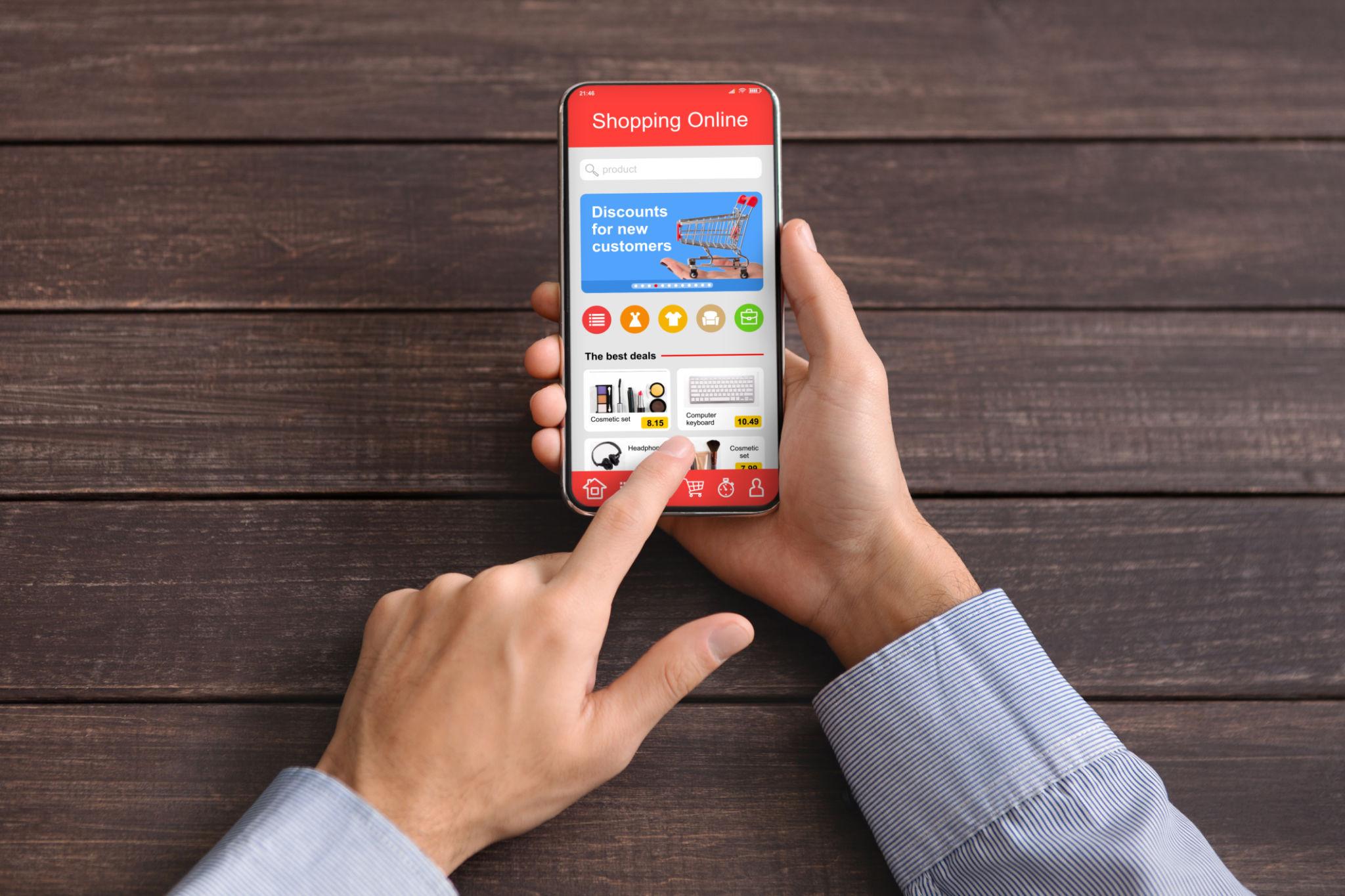
⚠️ Transparency note: PureCouponCodes is a coupon aggregator site. We're part of the industry this article criticizes. That means we have firsthand knowledge of how the coupon ecosystem works — including the parts that are broken. We'll point out practices we consider deceptive even when other sites in our own industry use them, and we'll be honest about where our own model fits in the picture. Our affiliate disclosure explains how we earn revenue.
Coupon fraud costs US businesses over $600 million annually, according to payment industry research tracked by pymnts.com. But that figure captures fraud against retailers — counterfeit barcodes, bulk-generated codes, abused promotions. It doesn't capture the quieter, more pervasive problem: the fraud against you, the shopper.

Here's what that looks like in practice. You search Google for "Nike coupon code." You click through 4–5 websites, each listing 10–20 codes. You try them. None work. You've just wasted 15 minutes. That seems harmless — annoying, but harmless. Except it's not random. Those sites were designed to waste your time. They exist because the act of clicking through to Nike.com earns the site an affiliate commission if you buy anything — whether or not a code worked. Your wasted time is their business model.
And that's the mild version. The serious version involves phishing pages that steal your payment data, fake "coupon membership" services that charge recurring fees, and social media ads offering 80% discounts that lead to counterfeit storefronts.
This guide will help you tell the difference between legitimate coupon sources and the ones designed to exploit you — from the obviously criminal to the more common grey area of sites that aren't technically scams but aren't honest either.
The Four Types of Fake Coupon Operations
Not all fake coupon schemes work the same way. Understanding the spectrum — from annoying-but-legal to genuinely criminal — helps you calibrate your response.
Type 1: Junk Coupon Sites (Legal, But Dishonest)
What they do: These sites list hundreds of "coupon codes" for popular retailers. Most codes are expired, fabricated, or were never real. The site doesn't test codes or verify anything — it scrapes code-looking strings from other sources (forums, old articles, other junk sites) and publishes them as if they're current.
How they make money: When you click "Get Code" or "Activate Deal," you're redirected to the retailer's website with an affiliate tracking cookie. If you buy anything — even without a discount — the site earns a commission (typically 3–10% of your purchase).
Why this matters: These sites aren't stealing your credit card. They're stealing your time and exploiting your intent to save money. They profit from your frustration, not from helping you. According to Capital One Shopping's research, the average coupon search yields a working code only 10–30% of the time — and junk sites are a major reason why.
How widespread this is: Very. The majority of coupon websites on the internet operate this model. Estimates suggest that 15–30% of the $13.4 billion affiliate marketing industry involves some form of fraudulent or misleading practices, and fake coupon sites are one of the primary techniques used.
Type 2: Phishing Sites (Criminal)
What they do: These sites mimic the appearance of legitimate coupon platforms or retailer websites. They require you to "register" to access coupons — and the registration form asks for personal information: name, email, phone number, sometimes credit card details or social security numbers.
How to spot them: The URL looks slightly off (amaz0n-deals.com instead of amazon.com), the design has minor inconsistencies (low-resolution logos, broken links, misspellings), and the registration form asks for more information than a coupon should require. No legitimate coupon site needs your social security number, bank account, or full credit card number to provide a promo code.
Real example: The Better Business Bureau has documented cases where fake coupon sites charged monthly "membership fees" for access to coupons that either never arrived or were themselves fraudulent. Victims lost both the membership fee and, in some cases, had their payment details used for unauthorized charges.
Type 3: Social Media Coupon Scams (Criminal)
What they do: Ads on Facebook, Instagram, TikTok, or X (Twitter) promise extreme discounts — "90% off Nike, today only!" or "$5 Ray-Ban sunglasses!" — and link to fake storefronts that look convincingly real. You "purchase" products that never arrive, or receive counterfeit goods.
The scale: The BBB has received numerous reports of consumers ordering through social media coupon links, never receiving products, and finding the website no longer exists when they attempt to get a refund. Tracking numbers are sometimes provided but show false "delivered" statuses.
What makes these effective: They use the same logos, product images, and design language as legitimate brands. On a phone screen scrolling quickly through a social media feed, they're easy to mistake for a real brand ad.
Type 4: Counterfeit Coupon Operations (Criminal, Large-Scale)
What they do: Organized groups create realistic counterfeit manufacturer coupons — complete with real-looking barcodes — and distribute them online, sometimes selling them in bulk.
Real case: The operation that inspired the 2021 movie Queenpins was real. From 2007 to 2012, three women ran SavvyShopperSite.com, selling counterfeit manufacturer coupons purchased from overseas. The operation caused over $40 million in losses before the FBI and Phoenix police seized the fake coupons. The ringleader received 2 years in prison; her accomplices got probation. In a separate 2021 case, a Virginia woman was sentenced to more than 12 years in prison for a $32 million counterfeit coupon scheme.
Red Flags: How to Spot a Fake in 30 Seconds
You don't need cybersecurity expertise to identify most fake coupon sources. A quick check against these red flags catches the vast majority of scams and junk sites.

The 30-Second Checklist
Red flag | What it means | What to do |
|---|---|---|
The discount is above 50% on a premium brand | Legitimate brands rarely discount this deeply. Nike at 90% off? Apple at 70% off? These don't exist. | Close the tab. If a deal seems too good to be true, it is — literally 100% of the time at this discount level for premium brands. |
No verification date next to the code | The site doesn't test its codes. It scraped them from somewhere and published them unchecked. | Use a different source. A site worth trusting shows when each code was last verified. |
"Get Code" button leads to the retailer's homepage, with no actual code displayed | There is no code. This is an affiliate redirect designed to earn a commission if you buy anything. | Leave the site. This is the #1 junk site tactic. If no alphanumeric code is visible before clicking, it doesn't exist. |
The site requires registration, personal details, or payment to "access" coupons | Legitimate coupon codes are free. No registration or payment is needed. | Do not enter any information. Close immediately. |
The URL doesn't match the brand it claims to represent | You're on a phishing site or fake storefront. Examples: nik3-deals.com, amazonsale-today.net, target-coupons-official.com | Leave immediately. Navigate to the real retailer's website by typing the URL directly. |
The website has excessive pop-ups, redirects, or auto-playing ads | This is a low-quality junk site monetized through ads and misleading clicks. | Close the tab. |
No expiration date on the coupon | Legitimate promo codes have expiration dates. No date = no verification = likely fabricated. | Don't waste time trying the code. |
The "coupon" requires sharing on social media first | This is a distribution scheme to expand the scam's reach through your own social network. | Do not share. Close the page. |
Side-by-Side: Legitimate Coupon Site vs. Junk Coupon Site
Feature | Legitimate site | Junk site |
|---|---|---|
Code display | Shows the actual alphanumeric code before you click anything | Hides behind "Reveal Code" or "Get Deal" button that redirects with no code |
Verification date | "Verified March 28, 2026" or "Tested today" next to each code | No date, or "Updated March 2026" at the page level (meaningless — only individual code dates matter) |
Number of codes per retailer | 3–8 active, tested codes | 15–30 "codes" — most expired or fake to make the page look comprehensive |
Success rate indication | Some sites show "Used by X people" or "X% success rate" | No indication, or fabricated success metrics |
Affiliate disclosure | Visible disclosure that the site earns commissions | Hidden, absent, or buried in a page no one reads |
Contact information | Real company name, address, or editorial team | No contact info, generic "admin" pages, or stock photos as "team" |
The Grey Area: Practices That Aren't Scams But Aren't Honest Either
This is the section most coupon guides won't write — because they'd be describing themselves. But since we promised honesty, here it is.

"Deals" that are just affiliate links
Many coupon sites list "deals" that say things like "Free Shipping at Nike" or "Up to 40% Off at Nordstrom." When you click, you're redirected to the retailer's website. The "deal" was just the retailer's normal standing offer — available to everyone, with or without the coupon site. But the coupon site earns an affiliate commission if you purchase.
Is this a scam? Technically, no. The deal exists, and you weren't lied to. But it's misleading — it's presented as if the coupon site found or negotiated a special offer, when in reality they just wrapped a standard link in "deal" language.
How to tell: If the "deal" has no code and the description matches what's already on the retailer's own website (a sale banner, a standing free shipping policy), the coupon site added no value. You could have navigated directly.
Codes listed as "active" that were last verified months ago
Some sites display codes with no verification date, or with a date that's weeks or months old. In the coupon world, codes often expire within days. A code "verified" 3 months ago has a high probability of being dead.
What honest looks like: A code with today's or yesterday's verification date, or a clear label saying "may be expired — try at your own risk."
"Exclusive" codes that aren't exclusive
Some sites label codes as "exclusive" or "only at [site name]" when the same code is available everywhere — on the retailer's own website, in their email newsletter, and on five other coupon aggregators. The "exclusive" label is a trust signal designed to make you think you've found something special. Check the retailer's homepage or email signup before assuming a code is unique to one source.
Our own position in this ecosystem
We should be direct: PureCouponCodes is a coupon aggregator that earns affiliate commissions. The same economic model that junk sites exploit is, at its core, the model that funds our site too. The difference — we believe — is that we test codes before publishing, display verification dates, and remove codes that stop working. But you should evaluate us by the same criteria we've outlined above. If a code on our site doesn't show a recent verification date, treat it with the same skepticism you'd apply anywhere else.
What to Do If You've Been Scammed
Not all coupon fraud can be prevented. If you've already interacted with a scam site, here's the response playbook based on what happened.

If you entered payment information on a fake site:
Contact your bank or credit card company immediately. Request a freeze on the card and a chargeback on any unauthorized charges. Credit cards offer better fraud protection than debit cards — this is one reason to always use a credit card for online purchases.
Change your passwords for any accounts that use the same email/password combination you entered on the fake site.
Monitor your statements for the next 90 days for unauthorized charges. Fraudsters sometimes wait weeks before using stolen payment data.
If you paid a "membership fee" for coupon access:
Request a chargeback through your credit card company. "Service not rendered" or "fraudulent charge" are the appropriate dispute categories.
Cancel the subscription if possible. Check your email for a confirmation email from the scam site — it may contain an unsubscribe or cancellation link.
Check for recurring charges. Some scam services sign you up for monthly billing. Set a calendar reminder to check your statement monthly for 6 months.
If you tried fake codes but didn't enter personal information:
You're fine. Trying a coupon code that doesn't work at a legitimate retailer's checkout is harmless — the retailer's system simply rejects it. No personal data was compromised, and no money was lost (beyond your time). The risk only exists when you interact with fake websites, not when you enter codes on real retailer sites.
If you received counterfeit products from a fake storefront:
Document everything — screenshots of the ad, the website, the order confirmation, and the product received.
File a chargeback with your credit card company.
Report to the FTC at ReportFraud.ftc.gov and to the BBB Scam Tracker at bbb.org/scamtracker.
Report the ad on the social media platform where you found it (Facebook, Instagram, TikTok all have "Report Ad" options).
How to Build a Scam-Proof Coupon Routine
Rather than evaluating each coupon source individually every time you shop, build a routine that keeps you safe by default.
The 3-Source System
Limit yourself to three trusted coupon sources and use them consistently. This eliminates the impulse to Google random codes and click through unknown sites.
Source 1: The retailer's own email list. Sign up for emails from stores you shop at regularly. The codes you receive are guaranteed legitimate, often exclusive, and arrive directly in your inbox. This is the highest-trust, highest-reliability source.
Read More: How to Find Working Coupon Codes When Nothing Else Works
Source 2: One verified coupon aggregator you trust. Pick one — PureCouponCodes, RetailMeNot, CouponFollow, SimplyCodes — and use it as your go-to. Evaluate it by the criteria in this article: does it show verification dates? Does it display real codes (not just redirect links)? Does it have clear contact information and editorial standards? If it passes those tests, stick with it.
Source 3: A browser extension as a passive safety net. Honey, Capital One Shopping, or Coupert will auto-test codes at checkout without you visiting any external sites. They're not perfect (they don't always find the best code), but they eliminate the temptation to Google random codes — which is where most people encounter scam sites.
Read More: Browser Extensions That Find Coupons Automatically: Honest Review 2026
What to Never Do
Never Google "[brand name] coupon code" and click through pages of results. This is the #1 way people encounter junk sites and phishing pages. The sites ranking for these searches are often specifically optimized to capture coupon-seekers — not to provide working codes.
Never enter personal information to "unlock" a coupon. A legitimate coupon is a string of letters and numbers. It requires zero personal data to exist. If a site asks for your name, phone number, address, or payment information before showing you a code, it's harvesting data.
Never click coupon links in unsolicited texts or social media DMs. Legitimate brands do not distribute coupons through random text messages from unknown numbers or through DMs from accounts you don't follow. These are phishing vectors.
Never buy coupons. Almost all manufacturer and retailer coupons are marked "non-transferable." Buying them violates the terms of use and puts you at risk of using counterfeit codes — which, as the $40 million SavvyShopperSite case demonstrates, is a real crime with real consequences.
Never share a coupon link to "unlock" your own discount. This is a social engineering tactic designed to use your social network as a distribution channel for the scam. The "coupon" you're sharing doesn't exist; the scheme earns money from the people you send it to.
How to Evaluate Any Coupon Source (A Scoring Framework)
When you encounter a new coupon site or see someone recommend a source you haven't used, run it through these five questions. Each "yes" earns a point; each "no" is a reason for caution.
Question | What you're checking | Score |
|---|---|---|
1. Does it show verification dates on individual codes? | The site actually tests codes, not just lists them | ✅ or ❌ |
2. Can you see the actual code before clicking? | The site provides value, not just affiliate redirects | ✅ or ❌ |
3. Does it have a visible affiliate disclosure? | The site is transparent about how it makes money | ✅ or ❌ |
4. Does it list a real editorial team or company behind it? | Accountability — someone stands behind the information | ✅ or ❌ |
5. Does it recommend competing platforms when they're better? | The site prioritizes your interest, not just its own revenue | ✅ or ❌ |
5/5: Trustworthy. Use confidently. 3–4/5: Decent. Use the codes but verify critical ones yourself. 1–2/5: Unreliable. Don't waste your time. 0/5: Likely a junk site or scam. Leave immediately.
Apply this framework to any coupon source — including ours. If PureCouponCodes doesn't score well on these questions during your visit, you should use a different site. The framework is more important than any particular recommendation.
The Bigger Picture: Why Fake Coupons Exist (And Won't Disappear)
The fake coupon problem is a symptom, not the disease. The disease is an economic model where any website — regardless of quality — can earn money by redirecting shoppers to retailers. As long as affiliate commissions reward clicks rather than value, there will be sites that game the system.
This is a structural problem the coupon industry hasn't solved. Some progress has been made: Google has downgraded low-quality coupon sites in search rankings, browsers now warn about known phishing domains, and platforms like RetailMeNot and CouponFollow have invested in verification infrastructure. But the underlying incentive — that a site profits from your click regardless of whether you saved money — remains intact.
As a consumer, you can't fix this system. But you can opt out of the parts that exploit you. The 3-Source System described above effectively removes junk sites from your shopping experience. When you stop Googling "[brand] coupon code" and instead use a curated set of verified sources, the junk sites lose their only way to reach you — and the only currency you're spending to use them (your time) goes back into your pocket.
Read More: What Is a Promo Code? How Coupon Codes Work at Checkout
Frequently Asked Questions
Is it safe to try a coupon code I found online? Entering a code at a legitimate retailer's checkout is always safe — the worst that happens is the code is rejected. The risk isn't in trying codes; it's in the sites you visit to find them. The danger is on the coupon site, not at the retailer's checkout.
How can I tell if a coupon site is legitimate? Check for individual code verification dates, visible affiliate disclosure, real editorial team information, and whether it shows actual codes rather than just redirect buttons. Our 5-question scoring framework above provides a systematic way to evaluate any source.
Are "80% off" coupons ever real? For premium brands — essentially never. An 80% discount on Nike, Apple, Dyson, or any established brand is virtually guaranteed to be a scam, a counterfeit storefront, or bait for a phishing scheme. Realistic discounts from premium brands are typically 10–30%, or up to 40–50% during major clearance events on older inventory.
Is it illegal to use a fake coupon code? Knowingly using counterfeit manufacturer coupons is illegal and has resulted in criminal convictions and prison sentences. However, trying a promo code that turns out to be invalid or expired at a legitimate checkout is not illegal — the system simply rejects it. The distinction is between attempting to defraud a retailer (criminal) and entering a code that doesn't work (harmless).
What should I do if I see a fake coupon ad on social media? Report it directly on the platform (Facebook, Instagram, TikTok, and X all have "Report Ad" features). You can also report it to the FTC at ReportFraud.ftc.gov and to the BBB Scam Tracker at bbb.org/scamtracker. Reporting helps platforms remove the ad and protects other people from the same scam.
Can browser extensions protect me from fake coupon sites? Partially. Extensions like Honey and Capital One Shopping apply codes at checkout, which means you don't need to visit external coupon sites at all for code testing. But extensions don't protect you from phishing sites or fake storefronts reached through social media ads — those require your own judgment and the red flags described in this guide.
Do coupon sites really make money from expired codes? Yes. A junk site listing 20 expired codes for a retailer earns a commission whenever someone clicks through and buys anything — regardless of whether a code worked. The expired codes are bait to get you to the retailer's site. Your frustration is a feature, not a bug, of their business model.
This article was written by the PureCouponCodes Content Team. Fraud statistics sourced from pymnts.com, the Better Business Bureau (2025), Bitdefender research, NordVPN, and Marcode affiliate fraud research. Case details on the SavvyShopperSite and Virginia counterfeit coupon operations are sourced from court records and BBB reporting. PureCouponCodes earns affiliate commissions — the same economic model this article examines critically. We believe transparency about this fact is the minimum standard any coupon site should meet. See our Affiliate Disclosure for full details.