A note on conflicts of interest — please read this before continuing.
This article reviews four cashback apps: Rakuten, Ibotta, TopCashback, and Fetch Rewards. We have active affiliate agreements with Rakuten, Ibotta, and TopCashback — meaning PureCouponCodes.com earns a referral fee if you sign up through our links. We do not have an affiliate agreement with Fetch Rewards.
We want to be direct about what this means: despite our best efforts to be objective, we cannot fully eliminate the financial incentive to recommend the three apps we earn from. We have tried to mitigate this by anchoring all performance claims to third-party test data (cited below), giving Fetch equal coverage despite earning nothing from it, and including genuine weaknesses for every platform — including the three that pay us.
You should weigh this context when reading our conclusions. Full Affiliate Disclosure →
Nearly 40 million Americans use cashback apps to earn back money on purchases they were already going to make. The category is genuinely valuable — but it is also heavily marketed, and the difference between what these apps promise and what the average user actually earns is significant.
This guide compares the four most widely used cashback platforms in 2026 using third-party test data where available, published terms as of April 2026, and an honest look at the gap between typical and power-user earnings. We also address where a coupon code fits in the savings stack — and why it belongs before cashback, not instead of it.
How Cashback Apps Work: The Business Model You Should Understand
These apps are free because retailers pay them. When you click through a cashback portal before shopping, the retailer pays the platform a referral commission — typically 2–15% of your purchase. The platform keeps a cut and shares the rest with you as "cashback."
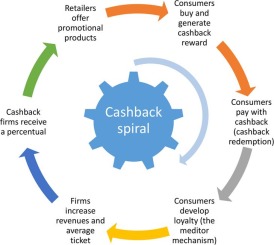
Three things follow directly from this model:
Rates vary by retailer and by platform because each platform negotiates different commission splits. A retailer that needs customer acquisition aggressively will offer higher rates; a retailer with a dominant market position (like Amazon) can negotiate much lower rates or exclude portals entirely.
Rates change constantly based on promotional budgets and retailer demand. The rate shown today for a given store may be different next week.
No single platform pays more everywhere. Always compare rates between Rakuten and TopCashback before a significant purchase. A 60-second check often reveals a 1–5% rate difference on the same retailer.
The Four Platforms: Compared in Equal Depth
1. Rakuten — Largest Network, Most Convenient
Rakuten (formerly Ebates, now owned by Rakuten Group, Japan) is the largest cashback portal in the US by retailer coverage and user base.
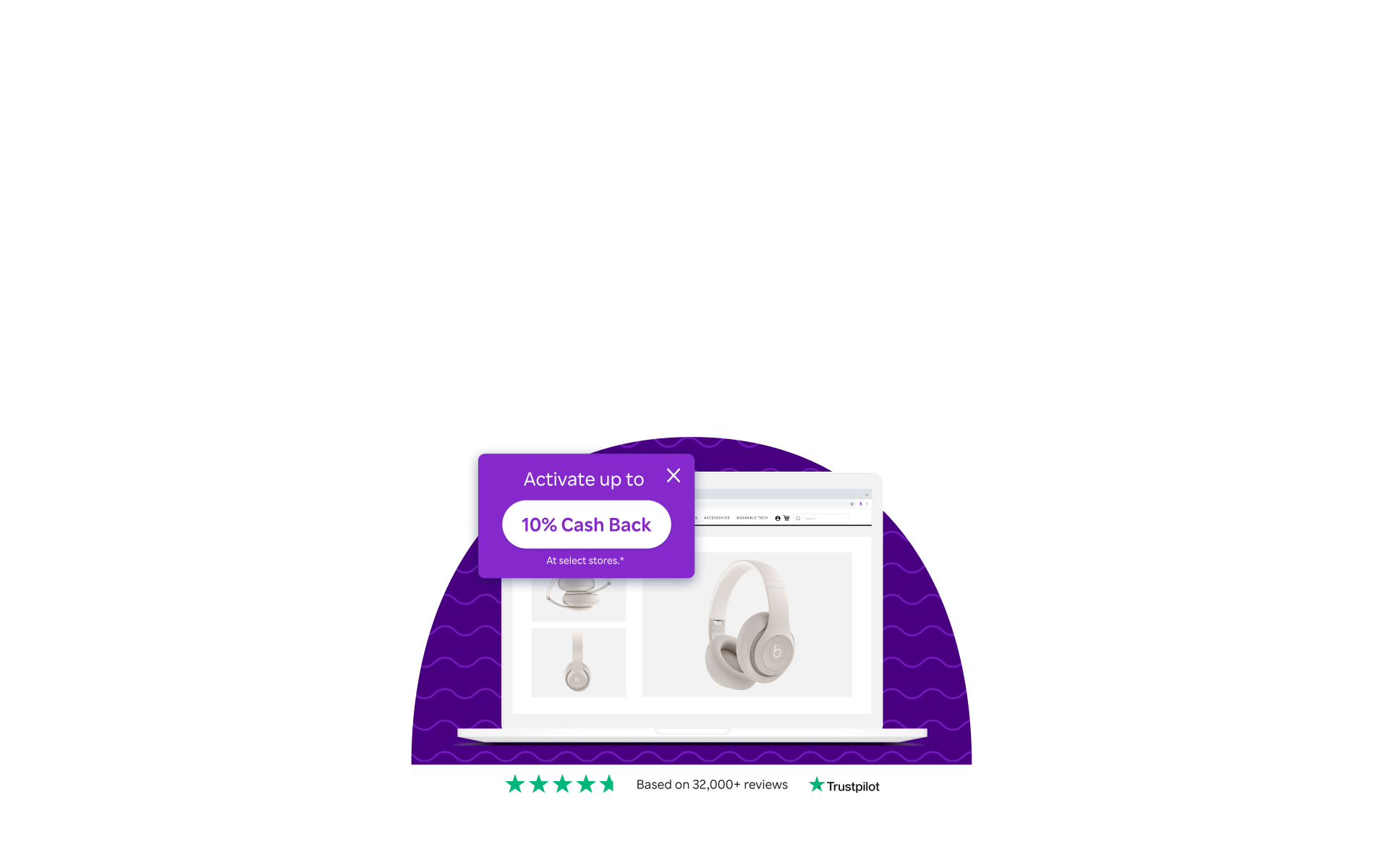
How it works: Install the Rakuten browser extension. It automatically detects when you visit a participating retailer's site and activates cashback without any manual action. Purchases are tracked and cashback accumulates in your account until the quarterly payout.
Key terms (April 2026):
Cashback range: 1–15% at most retailers; 20–30% during Double Cash Back promotions
Payout schedule: Quarterly — February, May, August, November
Payout minimum: $5.01
Payout methods: PayPal or mailed check
Sign-up bonus: $30 after first qualifying $30 purchase
Retailer count: 3,500+
In-store cashback: Yes, via linked card at select retailers
Third-party performance data: In a six-month tracking study by Visu Network (December 2025), Rakuten generated $127 in cashback from standard online shopping — the highest among the four apps tested in that study. In a separate six-month comparison by moneysmylife.com (January 2026), Rakuten was outperformed by TopCashback at most retailers by an average of 2.7%, though Rakuten held the advantage at home improvement stores and Kohl's.
Honest weaknesses:
Quarterly payouts are the biggest practical frustration — you may wait up to 90 days to access earned cashback
Weak in-store and grocery support; primarily designed for desktop/online shopping
Amazon cashback tracking is unreliable. Amazon's affiliate program terms frequently block portal tracking, meaning cashback you think you've earned may not be credited. For consistent Amazon savings, a dedicated credit card outperforms any portal.
Rates at some major retailers are low (1–2%), which barely justifies the click-through step for small purchases
Affiliate link: Sign up for Rakuten → — PureCouponCodes.com earns a referral fee if you join.
2. Ibotta — Best for Grocery and In-Store Shopping
Ibotta operates on a different model from portal-based apps. Rather than earning a percentage of a total order, Ibotta offers item-specific rebates — for example, $0.75 back on one specific yogurt brand, or $1.00 off a particular cleaning product. This makes it complementary to Rakuten rather than a replacement.
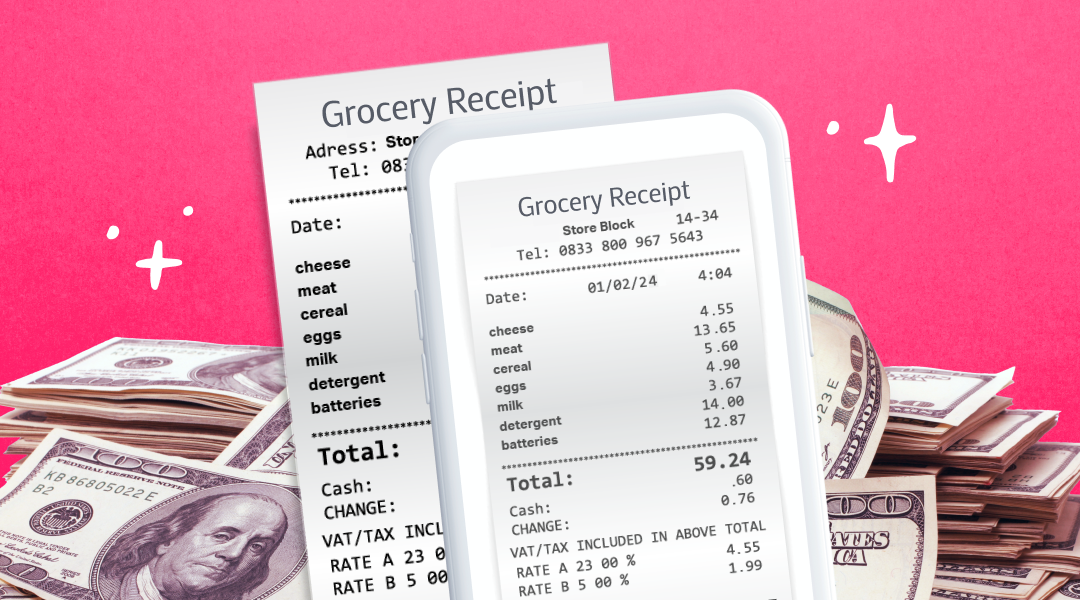
How it works: Before shopping, open the Ibotta app and activate the offers that match what you plan to buy. After shopping, either scan your paper receipt or link your store loyalty card to Ibotta for automatic match. Verified cashback is credited to your account within 24–48 hours.
Key terms (April 2026):
Cashback structure: Item-specific dollar amounts (not % of total order)
Participating stores: 85+ chains including Walmart, Kroger, Target, Publix, Aldi, Costco, and Sam's Club
Payout minimum: $20
Payout methods: PayPal or direct bank transfer
Sign-up bonus: $5 welcome bonus for new users
Third-party performance data: In the Visu Network six-month study, Ibotta generated $89 in cashback from grocery and everyday-item purchases — second highest overall and the clear leader for in-store categories.
Honest weaknesses:
Requires offer activation before shopping. If you forget to activate or scan the receipt promptly, the earnings are lost.
Only pays on specific partner brands. Shoppers who primarily buy generic or store-brand products will find offers sparse.
$20 minimum payout is the highest of the four apps compared here
Ibotta charges a $3.99 monthly account maintenance fee after 6 consecutive months of inactivity. This is not prominently disclosed during signup. If you sign up, use the app seasonally, and don't cash out, the fee will erode your balance. Set a reminder if you use Ibotta infrequently.
Online shopping functionality exists but is limited compared to Rakuten or TopCashback
Affiliate link: Sign up for Ibotta → — PureCouponCodes.com earns a referral fee if you join.
3. TopCashback — Highest Rates, Most Payout Flexibility
TopCashback is a UK-founded platform that has gained significant US market share by emphasizing higher payout rates than competitors. Its model is straightforward: pass back close to 100% of commission earnings to members rather than retaining a large cut.
How it works: Click through TopCashback to a retailer before shopping, or install the browser extension for automatic activation. Cashback accumulates and can be withdrawn at any time with no minimum balance requirement.
Key terms (April 2026):
Cashback range: 1–35% depending on retailer
Payout minimum: $0 — withdraw any amount at any time
Payout methods: PayPal, ACH bank transfer, direct deposit, or gift cards (gift cards often carry a small bonus rate)
Sign-up bonus: $25 welcome bonus after earning $10 in cashback
Third-party performance data: In the moneysmylife.com six-month comparison (January 2026), TopCashback paid an average of 2.7% more than Rakuten across identical purchases at 15 major retailers, translating to an extra $211.73 on approximately $7,800 of spending. The study noted exceptions: Rakuten outperformed TopCashback at Home Depot, Lowe's, and Kohl's specifically.
This data reinforces the case for rate comparison rather than platform loyalty. Neither Rakuten nor TopCashback wins everywhere.
Honest weaknesses:
The interface and mobile app are less polished than Rakuten's — a minor but consistent complaint among users
Slightly smaller retailer count than Rakuten, though all major US retailers are covered
Promotional events (equivalent to Rakuten's Double Cash Back) are less frequent and less prominently marketed
Customer support response times are slower than Rakuten's according to user reports when cashback fails to track
Affiliate link: Sign up for TopCashback → — PureCouponCodes.com earns a referral fee if you join.
4. Fetch Rewards — Best for Passive, Zero-Planning Savings
Note: PureCouponCodes.com does not have an affiliate agreement with Fetch Rewards. This section receives the same depth as the others because Fetch is genuinely useful — not because it generates revenue for us.
Fetch operates on a meaningfully different model from the three portal-based apps above. Rather than requiring pre-activation of offers or click-throughs before purchase, Fetch earns you points simply for scanning any receipt from any store after the fact. No planning required.
How it works: Download the Fetch app. After any shopping trip — grocery store, restaurant, gas station, drug store — open Fetch and photograph your receipt. The app awards points based on the receipt total and additional bonus points for purchasing specific partner brand products. Points accumulate and are redeemed for gift cards.
Key terms (April 2026):
Earning structure: Points (not direct cash). Approximately 1,000 points = $1 in gift card value
Accepted receipts: Virtually any store — not limited to partner retailers
Bonus earnings: Extra points for buying products from 300+ partner brands (shown in the app's "Offers" tab before shopping, but not required)
Payout: Gift cards starting at 3,000 points ($3 value) — no minimum for redemption
No inactivity fees
Third-party performance data: In the Visu Network six-month study, Fetch generated $43 in gift card value from standard shopping receipts — the lowest absolute total of the four apps tested, but with the lowest effort investment. The study noted that roughly half of Fetch earnings came from the bonus brand offers, not from passive receipt scanning alone.
The honest limitations of Fetch:
Points, not cash. Unlike Rakuten, Ibotta, and TopCashback which pay real dollars via PayPal or bank transfer, Fetch pays in gift cards only. The actual dollar value depends on which gift cards you choose and whether bonus rates apply.
Lower earning ceiling. For the same weekly spending, Fetch will generate less value than Rakuten or TopCashback on most purchases. The convenience comes at a cost to earnings.
Bonus brand reliance. The $43 in the six-month study would have been closer to $20–$25 without brand-specific bonus offers. Purely passive scanning (without checking the Offers tab) earns significantly less.
Retroactive only. Fetch cannot be combined mid-transaction with portal cashback. You scan after the fact. If you also used Rakuten for an online purchase, you cannot scan that receipt in Fetch — portal purchases are digital and receipt-less.
Why Fetch is still worth using: It fills the gaps. Receipts from stores not covered by Ibotta, small purchases where activating Rakuten isn't worth the effort, in-person transactions at restaurants or local shops — Fetch earns something where every other app earns nothing. The five seconds it takes to scan a receipt adds up meaningfully over a year.
Best for: Adding as a passive additional layer on top of your primary apps. Not a standalone savings strategy, but a low-friction complement to it.
Side-by-Side Comparison
Rakuten | Ibotta | TopCashback | Fetch | |
|---|---|---|---|---|
Best use case | Online shopping | In-store grocery | Max rate, online | Passive gap-filling |
Cashback type | % of order | Per-item $ | % of order | Points → gift cards |
Payout minimum | $5.01 | $20.00 | $0 | $3 gift card |
Payout frequency | Quarterly | On demand | On demand | On demand |
Sign-up bonus | $30 | $5 | $25 | None |
Inactivity fee | No | $3.99/6 months | No | No |
Amazon cashback | Unreliable | No | Unreliable | No |
Affiliate link on this page | Yes | Yes | Yes | No |
The affiliate link row is included deliberately. It is relevant context for evaluating this article's recommendations.
The Stacking Order: Where Coupon Codes Fit
Cashback is calculated on the price you actually pay — meaning a coupon code applied first reduces your base price, which slightly lowers the absolute dollar value of your cashback but increases your total savings. The two tools work on different layers and do not conflict.
The effective order for any online purchase:
Find a coupon or promo code first. A verified discount code reduces your base price before anything else is applied. Sites like RetailMeNot, Honey's browser extension, or dedicated coupon databases are useful here — including PureCouponCodes.com, which verifies codes before listing them and covers a broad range of US retailers.
Click through a cashback portal (Rakuten or TopCashback — compare rates first).
Apply any retailer loyalty coupons at checkout (clipped coupons, store loyalty discounts).
Pay with a cashback credit card for an additional 1–5% back.
These four layers operate independently. Using one does not prevent using the others.
How Much Do Cashback Apps Actually Pay? Honest Numbers.
Cashback app marketing leads with best-case scenarios. Here is a more realistic breakdown, based on third-party test data and a distinction between typical and active users.
User Type | Description | Likely Annual Earnings |
|---|---|---|
Passive | Rakuten extension only, no active offer management | $40–$100 |
Typical | Rakuten + Ibotta (groceries weekly) | $120–$250 |
Active | Rakuten + TopCashback (rate comparison) + Ibotta + Fetch | $250–$450 |
Power user | All of the above + cashback credit card + coupon codes | $450–$700 |
Important caveats on these numbers:
The Visu Network six-month test generated $127 + $89 + $43 = $259 combined from Rakuten, Ibotta, and Fetch. Annualized, that suggests approximately $500 per year for an active, multi-app user — at the high end of the "Active" tier above, not the aspirational $1,000+ figure some articles cite.
Earnings scale with spending volume. The test was conducted with normal household shopping — not manufactured or bulk spending. A household that spends significantly more than average on discretionary categories will earn proportionally more.
The "Power user" tier requires consistent discipline: checking two cashback portals before every significant purchase, activating Ibotta offers before every grocery trip, and maintaining a coupon-first habit. Most users do not sustain this across all purchases.
The most honest summary: for most households using two to three of these apps with moderate consistency, $150–$300 per year is a realistic expectation. More is achievable, but requires more active management than the apps' marketing implies.
Common Cashback Mistakes Worth Avoiding
Buying specifically to earn cashback. A 10% cashback offer on something you wouldn't have purchased otherwise is not a 10% saving — it is a 90% expense you created. This is how cashback programs increase total consumer spending, which benefits retailers and platforms even when individual users feel they're saving money.

Using both Rakuten and TopCashback on the same purchase. Only one portal can track a single online purchase. Activating both will result in one failing to credit. Choose one per purchase — whichever has the better rate.
Forgetting to activate Ibotta offers before the store visit. Ibotta's earning model depends on pre-activation. Scanning a receipt for products you didn't activate in advance earns nothing on those items. Two minutes in the app before shopping protects against this.
Expecting reliable Amazon cashback from any portal. Amazon's affiliate terms are designed to prevent portal stacking. Cashback on Amazon purchases through Rakuten or TopCashback is inconsistent, frequently reversed, and not something to rely on. A dedicated Amazon credit card with 5% back is more dependable for Amazon-specific savings.
Letting your Ibotta balance sit inactive. The $3.99/month inactivity fee after six months is easy to forget. If you stop using Ibotta, cash out your balance before leaving it dormant.
Frequently Asked Questions
Do I need to choose one app or can I use all of them? You can use all four simultaneously — but only one cashback portal per online purchase. Use Rakuten or TopCashback (not both) for each online order, Ibotta for in-store grocery items, and Fetch to scan any receipts the other apps don't cover.
Which app is best for someone who just wants to start? Install the Rakuten browser extension and leave it on automatic. It requires no ongoing effort and will activate cashback without prompting you. Once that becomes habit, add Ibotta if you shop for groceries in-store regularly.
Is Fetch Rewards worth it compared to Rakuten? They serve different purposes and don't directly compete. Rakuten earns more per purchase but requires a portal click-through and has a limited retailer list. Fetch earns less but works on any receipt with zero planning. Most consistent savers use both.
Why isn't my cashback appearing? Most common causes: ad blocker interference (blocking tracking pixels), navigating away from the portal link before checkout was complete, or applying a coupon code from a browser extension that conflicted with portal tracking. If cashback doesn't appear within 48–72 hours, all four platforms have a manual submission process.
Does cashback count as taxable income? The IRS generally treats cashback as a rebate rather than income, so most cashback earnings are not taxable. Sign-up bonuses may be treated differently. Consult a tax professional for amounts that are meaningful relative to your tax situation.
Final Assessment
For online shopping, Rakuten and TopCashback are both genuinely useful — with TopCashback paying more at most retailers but Rakuten occasionally winning at specific stores. Comparing rates before significant purchases takes 60 seconds and is the single highest-ROI habit in this space.
For in-store grocery shopping, Ibotta has no close competitor. The pre-activation requirement is a real friction point, but users who build it into their shopping routine consistently earn more per grocery dollar than any online portal can deliver.
Fetch is worth adding as a passive layer despite generating lower absolute earnings than the other three. Its main value is coverage — it earns something from purchases where everything else earns nothing.
Realistic annual earnings for a household using two to three of these apps consistently: $150–$350. Power-user scenarios exist, but they require active management most people don't sustain.
None of these apps replace the savings available from a verified coupon code applied before cashback. The two tools work in sequence, not in competition.
Sources:
Visu Network, "I Tested 15 Cashback Apps for 6 Months" (December 2025): visu.network/blog/best-cashback-apps
moneysmylife.com, "TopCashback vs. Rakuten: Real Data from 6 Months" (January 2026): moneysmylife.com/topcashback-vs-rakuten-which-pays-more
Savings Grove, cashback platform comparison (March 2026): savingsgrove.com
SideIncomeFinder, cashback stacking analysis: sideincomefinder.com
Related Articles: